Gorilla Trekking in Uganda, Rwanda & Congo
Roughly a thousand mountain gorillas remain on earth, and every one of them lives in the forests we guide in. Here is exactly how a trek works.
One hour
Once the family is found, you spend a strictly timed hour with them. It goes faster than you expect.
Eight people
Only eight visitors are permitted per gorilla family per day, which is why permits sell out early.
1 to 6+ hours walking
The gorillas move daily. Some treks are short, some long and steep — nobody can promise which.
Minimum age 15
Set by the parks in both Uganda and Rwanda, and enforced at the briefing. Bring photo ID.
Five forests, three countries
Each has a different character, cost and journey time. We will steer you to the one that fits your trip, not the one that pays us most.
Bwindi Impenetrable — Uganda
The largest population of mountain gorillas anywhere, in genuinely dense rainforest. Four sectors: Buhoma, Ruhija, Rushaga and Nkuringo.
Mgahinga — Uganda
Small, quiet and dramatic, on the Virunga volcano chain. Home to the Nyakagezi family, and the best place to add golden monkey tracking.
Volcanoes — Rwanda
The shortest journey from an international airport — a few hours from Kigali. Higher permit cost, more open terrain.
Virunga — DR Congo
Africa’s oldest national park and the most adventurous of the three countries, often combined with the Nyiragongo lava lake.
Kibale Forest — Uganda
Not gorillas but chimpanzees, in one of the highest concentrations of primates in Africa. Pairs naturally with Queen Elizabeth NP.
Not sure which?
Tell us your arrival airport, your budget and how much walking you want to do. We will recommend one and explain why.
What actually happens
No surprises. This is the shape of the day from the moment you wake up.
Early briefing
You report to park headquarters around 7am. Rangers brief the group on rules and distance, then allocate you to a gorilla family based on fitness.
Into the forest
You set off with rangers and trackers who have followed the family since dawn. Terrain is steep, wet and thick — a porter is money well spent.
The hour
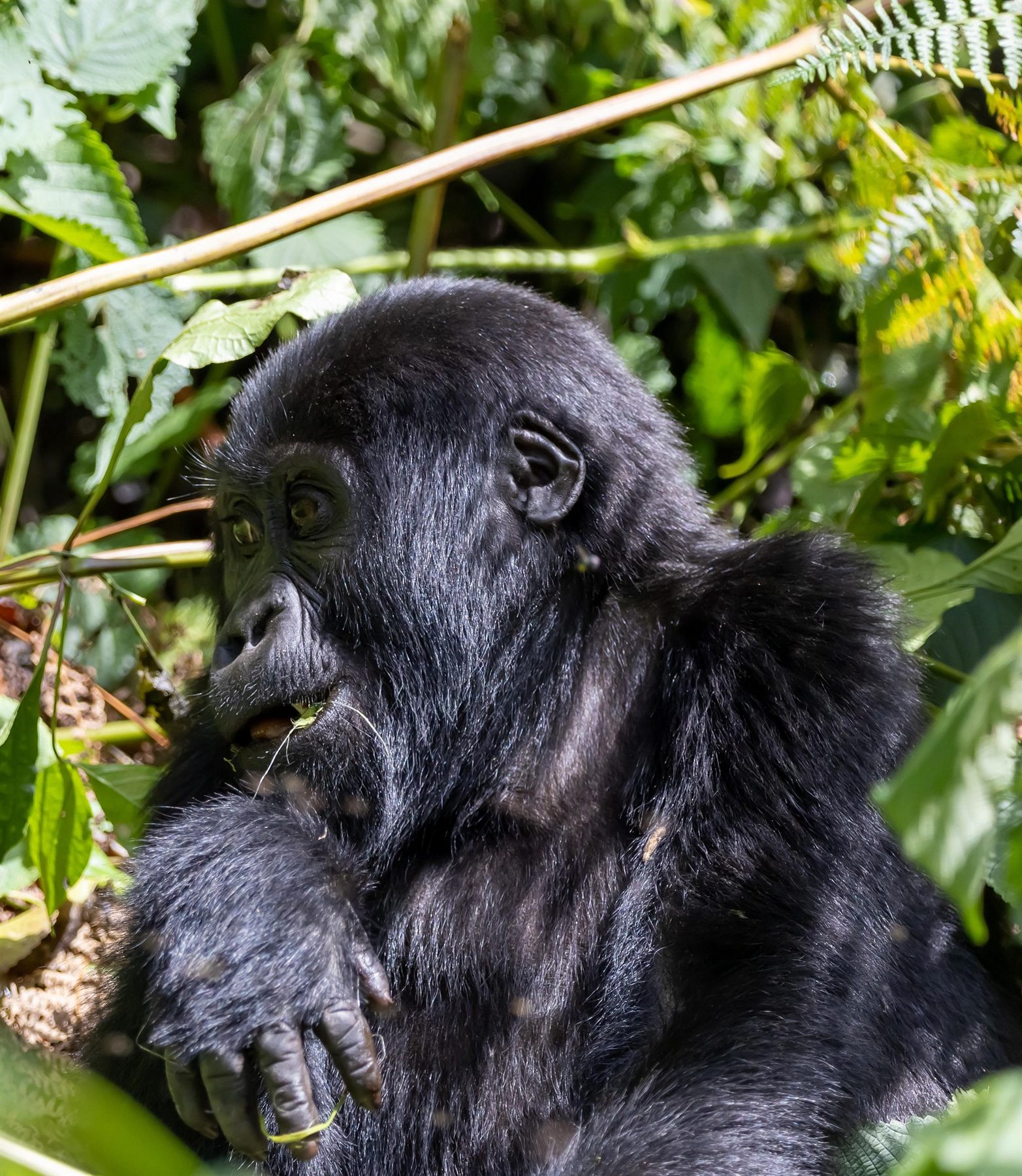
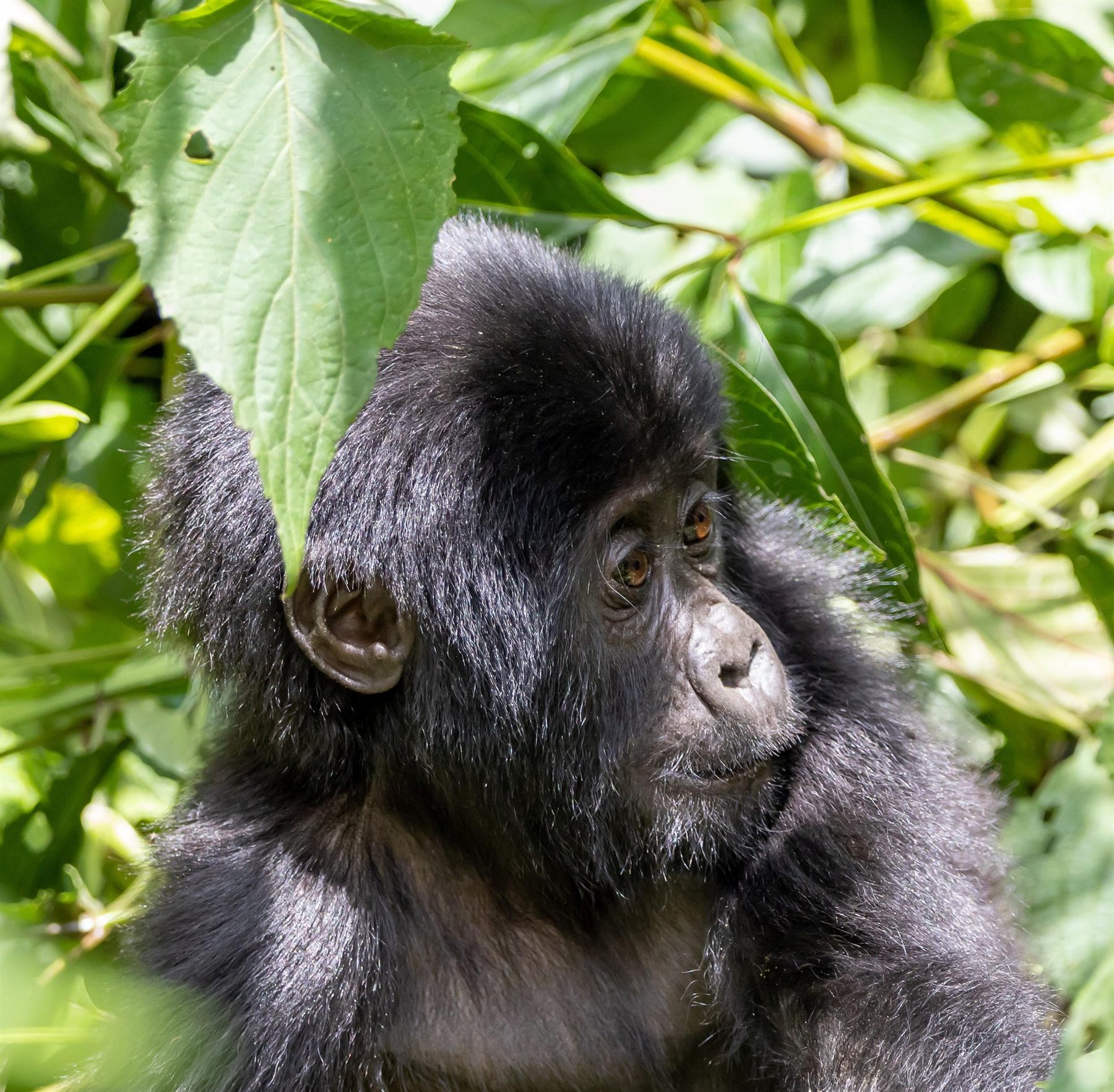
Bags are left behind, you stay seven metres back, and the clock starts. Silverbacks, mothers, infants overhead. Most people forget the camera.
Back and certificate
You walk out the way you came and receive a signed trekking certificate. Most groups are back at their lodge by mid-afternoon.
Best time for gorilla trekking
Trekking runs year-round. The difference is underfoot, not whether you will see gorillas.
- June to September — the long dry season. Firmer trails, easier walking, highest demand.
- December to February — the short dry season. Similar conditions, slightly quieter.
- March to May and October to November — wetter and muddier, but greener, quieter and often better value.
This is rainforest at altitude. It can rain in any month, so waterproofs come regardless of when you travel.
What to bring on trek day
Get these right and a hard trek becomes an enjoyable one.
Essential
- Waterproof hiking boots with ankle support
- Long trousers and long-sleeved shirt
- Waterproof jacket — non-negotiable in any month
- Gardening or work gloves for grabbing vegetation
- At least two litres of water and a packed lunch
- Passport and permit — checked at the briefing
Strongly recommended
- A porter — cheap, hugely helpful, direct local income
- Gaiters and insect repellent
- Camera with no flash — flash photography is prohibited
- Spare batteries and a dry bag for electronics
- Walking pole (usually available at the trailhead)
- A face mask, still required by some parks
Straight answers
Nothing wild is ever guaranteed, but success rates are very high. Trackers follow each habituated family from first light and radio their position, so guides walk towards a known location rather than searching blind.
Permit prices are set by each country’s wildlife authority and reviewed periodically, with Rwanda the most expensive and Uganda and Congo lower. Rather than publish a figure that may be out of date, ask us and we will confirm the current rate for your dates.
Reasonably fit rather than athletic. You are walking on steep, uneven, often muddy ground at altitude for one to six hours each way. Tell us about any knee or back issues and we will request a nearer family. Sedan-chair services are available at some trailheads.
Rwanda if your time is short: Volcanoes NP is a few hours from Kigali airport. Uganda if you want more for your money and a bigger trip — permits cost less, Bwindi has far more families, and you can pair it with Queen Elizabeth, Murchison Falls and Kibale.
No. Gorillas share much of our DNA and are highly vulnerable to human respiratory illness, so rangers will turn away anyone visibly unwell. This rule protects the animals and is applied strictly.
Keep about seven metres back, stay in a tight group, keep your voice low, no flash photography, no eating or drinking near the animals, and follow your ranger. If a silverback approaches, stand still and look down — do not run.
It usually is. Most travellers combine trekking with game drives in Queen Elizabeth or Murchison Falls, a boat cruise, and often chimpanzees in Kibale. Multi-country routes taking in Rwanda or Congo are equally straightforward.
Secure your trekking permit
Only a small number of people can trek each family each day. Tell us your dates and we will check what is available right now.